Markets and Markets reported the electronic health record (EHR) software market is poised to exceed $6 billion by 2015. In addition to government initiatives toward development of EHR, they also attribute the rising demand for healthcare cost containment and the need to improve the quality of healthcare services are driving the growth rate in this market. This is a huge jump as the EHR market was only about a $2 billion industry in 2009.
Not so surprising, they also noted that web-based EMR solutions or ASP models are gaining popularity with small-sized healthcare practices and physician offices. The popularity of web-based and ASP EHR solutions for smaller providers will force many smaller providers to upgrade their IT infrastructure, i.e. broadband access, hardware, LAN/WAN, software platform, etc. Therefore, IT opportunities should trickle down to smaller IT integrators and consultants.
Wednesday, June 22, 2011
EHR software market to exceed $6 billion
Monday, June 20, 2011
A Week in Review, June 20
HITECH Act moves healthcare IT industry forward
[MedCity News] As I travel the world speaking about the Health Information Technology for Economic and Clinical Health (HITECH) Act, I’m often asked to present objective evidence that it is making a difference. Read full story.
Consumer confidence about health data safety is key to EHR adoption
[Government Health IT] As the healthcare system becomes more connected, it will increasingly become a breeding ground for risk to individual privacy, confidential information, data integrity and service availability, according to health IT security experts. Read full story.
Are Health Insurers Prepared for Healthcare Reform?
[Insurance & Technology] Countless papers have been written about the impact of healthcare reform on the insurance industry, but few look at these changes from the perspective of how these mandates will impact healthcare payers -- particularly, technology, people and processes. In the interest of bridging that gap, let's take a look some of the challenges health insurers face, and some solutions they might consider. Read full story.
Friday, June 17, 2011
Whimsical Friday: Bicycle Computers
[Whimsical Friday is a light-hearted note on any technology that impacts our lives in some form or fashion.]
The past few weeks I've been looking to upgrade my bike game, trying to find a fun activity to stay active, healthier, and have a better quality of life (well, that's what the cycling brochure said). In the past when I needed, and/or wanted, a new bike I would go to the nearest Walmart and purchase whatever bike that was on sale. Since I really wanted to do more than cruise the neighborhood I decided I would get a bike from my LBS (local bike shop).

Sticker shock aside, I was amazed at all the gadgets that were available for such a simplistic activity, gone are the days when you just buy a bike and a box of patches to repair the inner tube that would eventually blowout. The LBS had CO2, wedge packs, skinny seats, wide seats, platform pedals, clip pedals, front suspension, rear suspension, seatpost suspension, computers, yes computers and not to mention a whole line of clothing apparel. So much for my cutoff jeans and vintage University of Florida Gator tee shirt from 1984.
Since I’m a computer kind of guy, I decided to pushed the salesperson on the computer gadget to find out exactly what it did. "Does it calculate the wind resistance and the friction between the road and tires to adjust the tension in the crankset automatically? Or is it constantly monitoring the pressure in my tires to let me know when one of the tires is below the required PSI levels?" The salesperson replied, "No. It tells you your current speed, trip distance, and second-trip distance. And it’s all touch-screen." "What? A speedometer?" "Yes." "Why didn’t you just say that? Geez!"
I’m all for technology advancement, but just because a few LED’s, IC's, and a digital display were put into a speedometer, it’s still a speedometer. I suspect the name change was driven by dollars and cents, you can probably charge more by calling it a "computer" versus a speedometer. By the way, there’s an app for that!
So I jumped in my computer, I meant my car, and drove home without buying the bike. I’ll checkout Walmart this weekend to see what they have on sale.
Wednesday, June 15, 2011
Citrix Virtualization for the iPad

In my past few blog posts, I’ve discussed the rapid penetration of iPad’s by health care providers. Virtualization is another reason why iPad’s are being readily adopted in the clinical setting.
Citrix’s Receiver application is a free app available for the iPad which allows users to access their virtualized Windows applications. In addition, it let users access and view both Adobe Flash-and Microsoft Silverlight-based Web sites, which isn’t allowed through Apple’s Safari. With Citrix Receiver, the iPad can provide most of the functionality of a desktop, including an on screen keyboard.
Nick Volosin, ISS director of technical Kaweah Delta Health District in Visalia, CA stated “It [iPad] gets the physicians in the patient rooms more, if the physician is in the room charting-versus at the document desk—the patient feels that they’re present. The patient can ask questions. They don’t have to push the nurse call button as much.”
If your organization has Citrix servers already install, it would be prudent to do due diligence on allowing connectivity via their Receiver app for the iPad. If your organization doesn’t have Citrix but considering it, enumerate this feature as a pro for installing Citrix.
Monday, June 13, 2011
A Week in Review, June 13
Study: EHR, paper workarounds may lead to efficiencies
[CMIO] Workarounds identified during the outpatient consultation management process, first studied two years ago, continue to challenge EHR-based ambulatory consultation systems, according a study in the July 2011 issue of the International Journal of Medical Informatics. Read full story.
Small Practices, Individuals Practitioners Struggle More to Overcome EHR Costs
[Becker’s Hospital Review] Solo physicians and small physician practices find it harder to remain financially viable as they work to choose, implement and learn to use electronic health records, according to a Government Health IT news report. Read full story.
Patient involvement is critical to success of Meaningful Use program
[Healthcare IT News] One of the major purposes of the federal program for the Meaningful Use of electronic health records (EHRs) is to produce improved clinical outcomes for patients. Providing patients access to their personal health information and having that information available to their families, caregivers and healthcare providers anywhere at any time is another core requirement of the Meaningful Use program. Read full story.
Friday, June 10, 2011
Whimsical Friday: No More iPhone Activation
[Whimsical Friday is a light-hearted note on any technology that impacts our lives in some form or fashion.]
The Zeus of Apple, Steve Jobs, made three major software-based announcements this week at the 2011 Worldwide Developers Conference (WWDC), OS X Lion, iOS 5, and iCloud.

iOS 5 is the latest upgrade of Apple’s operating system for its mobile devices, iPhone, Touch, iPad, and Apple TV. Whereas OS X Lion is the latest operating system upgrade for its Macintosh desktop and laptop computers. iCloud is their cloud service offering to store music, photos, apps, calendars, and documents automatically and wirelessly push the stored content to all of your devices. There are too many features and enhancements involved in this announcement for me to discuss here, in addition you can find better sources on the Internet that discuss this announcement in greater details than I ever could.
The one feature that stood out as having a significant impact for consumers is computer-free iOS device setup and updating. Jeremy Horwitz of iLounge described it the best “as the single most important change in iOS 5—and the one that will impact not just existing iOS users, but the next generation of new Apple customers, too: you won’t need a computer any more to activate and start using your iOS device. The required “Connect to iTunes” activation step has always been a small hassle for some users and a major roadblock for others, particularly people who don’t own desktop or laptop computers (yes, they exist!) but want to enjoy the benefits of an iPhone, iPad, or iPod touch. These users have either had to find friends or family to lean on for initial activation, backups and/or software updates; some people haven’t purchased Apple’s digital media devices solely because they’ve been tethered to computers.”
Just in the past couple of years, I can think of three people that have used my computer to activate their Touch and/or iPhone. I’m finally free of being iPhone activation central!
Thursday, June 9, 2011
iPad, Embraced By Health Care Providers
In one of my previous blog posts, Rapid Integration, I discussed the rapid adoption rate of tablet computers, iPads in particular, by physicians. One of my blog readers asked what were my thoughts on why the iPad was readily embraced by physicians?

Actually, healthcare providers have been using the iPhone for several years now for everything from voice recording to clinical data entry via the mass selection of apps that are available for this platform. So the rapid adoption rate of iPad by physicians really came as no surprise. However, I think there are a couple of characteristics that made the iPad even more attractive to health care providers.
First the price, for a few hundred bucks you can have the processing power of a desktop computer in your hands and/or lab jacket at a fraction of the weight and size. Secondly the apps, basically the iPad can run all of the apps available on the iPhone, and it can be used to enter data directly into EHR and CPOE systems. Thirdly the size, the iPad is about the same size as patient charts so carrying around an iPad is not awkward. Also the larger screen on the iPad makes it easier to obtain and enter information, and share this info with the patient.
Now if Jobs (Apple’s CEO) and Narayen (Adobe’s CEO) could settle their differences so the iPad can run Adobe’s Flash, this would open the iPad to many more applications.
Tuesday, June 7, 2011
A Week in Review, June 6
IBM Watson Beaten In Medical Diagnostics Race
[InformationWeek Healthcare] Sherlock Holmes would be proud of IBM's Watson computer. No longer the bumbling sidekick portrayed by Arthur Conan Doyle, the supercomputer has managed to master natural language skills, defeat Jeopardy contestants, and wow medical school professors with its potential to diagnose esoteric diseases. I suspect it would even make the late IBM President Thomas J. Watson, for whom the computer is named, proud. Read full story here.
Health Care Cloud Offers Some Risk, Endless Possibilities
[SearchHealthIT.com] Health care information technology, in many ways, trails other vertical markets. Contract attorney Diana McKenzie of HunterMaclean in Savannah, Ga. put it this way: When she first started practicing health IT law more than two decades ago, she found health care about eight years behind finance. Read full story here.
Verizon Enhances Security Programs For Healthcare Organizations
[InformationWeek Healthcare] Verizon has added new capabilities to two of its security programs, capabilities that should help health delivery organization strengthen security across their health systems and assess the security practices of partners they do business with. Read full story here.
Friday, June 3, 2011
Whimsical Friday: YouTube, Public Access Channel
[Whimsical Friday is a light-hearted note on any technology that impacts our lives in some form or fashion.]

Anyway, as I continue to think about Public Access television, I rationalized that YouTube is public access television. To get a show on YouTube all that is needed is a camera and means to upload your video, i.e. a cell phone purchased within the last 2-3 years with a camera would probably suffice. You can’t get more public access than that, right? Unlike cable’s Public Access television whereas most artists/personalities hope to get discovered to potentially cash in on their talents, with YouTube not only is the potential there to cash in if you get discovered but if one of your videos goes viral you cash in immediately.
I’ve taught myself several new skills by watching YouTube, i.e. how to apply an Invisible Shield to my iPod Touch, how to stain concrete, just to name a few. I've also watched some very entertaining videos of original content on YouTube at my leisure. Actually, Public Access television is still around, hopefully any person or persons still broadcasting their program on Public Access television are simultaneously posting their show on the other public access channel, YouTube. For the record, I've never self-taught myself anything from watching Public Access television.
Wednesday, June 1, 2011
IT Infrastructure for Telehealth
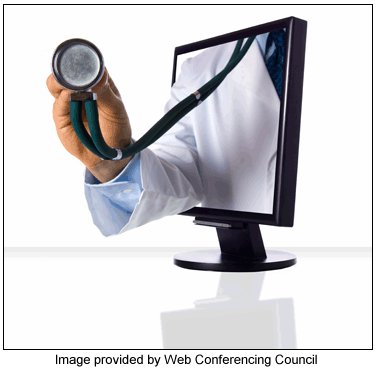
As baby-boomers continue to age, the demand on health services is set to double in the next 10 years. It’s not practical to believe the number of doctors and nurses, hospitals, and other healthcare providers will double also during this time, therefore, the industry will leverage technology to address these growing needs. Telephone and internet consultations will become increasingly more important as a method of providing and receiving healthcare advice.
Technology will be leveraged to provide care beyond the walls of hospitals and doctor’s offices, a routine trip to a doctor’s office could be replaced by a video, telephone, or even an internet consultation. Thereby free up time for the physician to spend with patients whose conditions require their full attention. In addition, healthcare providers will also increasingly need information systems to support non-collocated collaboration between clinicians.
The efficacy of telehealth requires the IT infrastructure to support this emerging remote physician-patient interaction; the infrastructure must connect and consolidate various imagining and clinical databases; and IT organizations must continually evaluate if and when SaaS and cloud computing is appropriate for their organization.
Monday, May 30, 2011
A Week in Review
Five Hot Trends in Healthcare Technologies
[ZDNet] The pace at which medicine and technology are converging is faster than most people realze. Today, point-of-care health technologies like tele-medicine and medical robots performing surgery in hospitals are common place. Apple iPads and other mobile devices have made their way into the exam room, and electronic medical record (EMR) vendors are following suit with compatible applications. Read full story here.
RealMed Facilitates Faster Payments by Embedding Claims Reconciliation Capabilities
[EMR and EHR News] RealMed, a leading provider of revenue cycle management solutions for health care industry, announced integration of its awarding winning capabilities with Epic. The integration provides Epic billing software clients with seamless access to RealMed’s powerful claims editing and error management tools from within the same interface used for processing claims today. Read full story here.
GlobalSign BIOWRAP Provides Healthcare, Pharmaceutical Industries with Security, Privacy and Compliance over all Digital Information
[SFGate] GlobalSign, one of the longest established Certification Authorities (CA) and specialists in online security, announced that its BIOWRAP Encrypted File system is now available to healthcare and pharmaceutical industry customers. Read full story here.
Friday, May 27, 2011
Whimsical Friday: My Favorite App
[Whimsical Friday is a light-hearted note on any technology that impacts our lives in some form or fashion.]

I’ve always been considered a music junkie (a termed coined by a fellow blogger, Chris Harris), and a self-proclaimed audiophile (albeit, an audiophile on a beer budget). So I guess it comes as no surprise my favorite app is related to my passion of music and audio equipment, Apple’s Remote app. Apple describes their app as “a free, fun, and easy-to-use app that turns your iPhone, iPad,or iPod touch into a remote control. So wherever you are in your house, you can control your computer’s iTunes library....”
What makes this app really cool is that I’m able to stream my iTunes library to my home audio system via Apple’s AirPort Express. Of course the audiophile in me has my iTunes library digitize in a lossless format; a wired connection from my home server to the AirPort Express, none of that wireless stuff because I don’t want one bit dropping from the signal on its way to the AVR; and of course, the output from the AirPort Express to my Rotel Processor is via an optical digital cable.
What does all of this means, at the touch of a screen I have access to my entire music library to play through my carefully crafted audio system from any location in my home and it sounds exactly as if I was playing the actual CD. Audio nirvana!! Except for those days when I relax with my virgin vinyl pressing of Stevie Wonder’s Innervision LP on my B&O turntable with its ortofon cartridge and a Discwasher vinyl record cleaner. What can I say, sometimes nostalgia trumps technological advances.
Thursday, May 26, 2011
Rapid Integration
Apple’s iPad has made tablet computing a reality, easy and cool. The list of touch-screen tablets is constantly evolving and growing, i.e. Apple iPad, Samsung Galaxy Tab, BlackBerry Playbook, etc.
Not only have they become the must gadget to have, there’s a good collection of useful applications that are making life easier for both physicians and patients. Knowledge Networks reported in March 2011 that 27% of physicians in the United States had a tablet-style computer which is about 5 times the general public’s adoption rate.
This rapid adoption rate by physicians requires for healthcare IT professionals to be able to integrate these devices rapidly with their enterprise IT landscape. Long gone are the days where corporate infrastructure groups could take years before allowing new platforms into the enterprise. For instance, in 2006 a Fortune 100 company initially only allowed RIM’s BlackBerry mobile devices onto their corporate platform. As the iPhone grew in popularity, and apps, more employees and executives begin requesting to have the iPhone as part of the IT enterprise. Almost 4 years later, the infrastructure group finally granted approval to allow Apple’s iPhone and OS as part of the IT enterprise landscape. The problem is that Google’s Android mobile devices are now growing at an outlandish rate, so as you would probably guess, a significant amount of employees, and executives, are now clamoring to have Android devices approved. So not only is the company playing catch up with developing and integrating Apple OS apps with enterprise applications, they are also behind with Android development and integration.
In a healthcare IT setting, this slow speed of integration could very well be life or death for a patient. Particularly in the case of physicians in remote areas, where a significant amount of mobile apps have been developed to assist with providing more efficient and timely care. The bottom line, tablets and similar mobile devices have enough processing power to rival that of desktop computers. Because of open development, new apps are literally released everyday and are being developed to do what was once unimaginable. The impact and benefit of apps, and the high rate of adoption of tablet devices by physicians, requires healthcare IT organizations to make streamlining and integrating these new mobile technologies at a much more rapid pace than most other industries a top priority..
Friday, May 20, 2011
Whimsical Friday: Death of the Wristwatch
[Whimsical Friday is a light-hearted note on any technology that impacts our lives in some form or fashion.]

While out and about Saturday afternoon I asked my teenage son to tell me what time it was because I had forgotten to put on my watch. Instead of him looking at a wristwatch he pulled out his phone to give me the time. Just like my daughter, 7 years his elder, who told me 6 years ago she didn't need a wristwatch because she could always get the time from her phone and/or iPod, one of which will be in her possession at all times. For the next few days when I dropped off my son at school, I noticed there were only a few students actually wearing watches. Heck, on some days I would see no students with a wristwatch on. Do you think Timex, Swatch, and Rolex know that Generation Z aren’t wearing watches? When did this happen?
It’s easy to understand cell phones replacing pagers, two-way communication devices, and land line phones; and iPods replacing portable cassette and CD players, and even CD’s for that matter, but wristwatches? I should have realized this sooner when I was in NYC about 7 years ago, I remember making the observation that there were more street vendors selling DVD’s versus watches. However, I didn’t make the correlation that the wristwatch was actually being replaced by an emerging technology. I thought the street vendors had a higher profit margin in hawking bootleg DVD’s versus bootleg wristwatches, hence the change in products.
In any case, the wristwatch has been terminated seemingly from an unlikely technology, cell phones and portable music players, and the street vendors of NYC were the first to realize it.
Tuesday, May 17, 2011
The ONC Wants Your Feedback
Let your voice be heard, the Office of the National Coordinator for Health Information Technology Health IT Standards committee is requesting public comment about the temporary electronic health record certification for Stage 1 of the meaningful use program. One of the specific areas they are seeking input on is should it be required to test and certify that any EHR Module presented for testing and certification properly integrates with another EHR Module by a different vendor.
On some level, this debate boils down to a closed proprietary ecosystem-think Adobe’s Flash platform versus a more open ecosystem-think Apple’s app for their iPhone platform, basically, will interoperability among vendors be forced for certification? Even today with the examples I gave-which by the way is Apple’s point of view-there’s healthy dialogue among informational technology professionals on which system, Apple or Adobe is closed and/or more opened. These platforms have been out for decades with millions of users, and they still do not interact with each other.
EHR is too important and critical to let permanently defining the certification program of meaningful use drag on for decades. Take the discussion about EHR certification out of the break room, cubicle pod and conference room, and let the ONC officially hear your opinion by June 17.
Sunday, August 30, 2009
EMR Implementation Training

One of the things that always surprised me was the level, or lack thereof, of basic computer skills that existed within most providers’ offices. This low level of computer skills existed not only with office personnel, but also with doctors and nurses. Therefore, when implementing new computer software a lot of time was spent providing basic computer training in addition to software specific training.
With EMR implementation it’s highly critical that both medical and office personnel are trained on EMR systems. If they are not properly trained they will become frustrated, and possibly, unproductive. An unproductive doctor and/or nurse in a clinical setting is not a good thing. If that happens it could sabotaged the best of EMR implementation projects.
Keep in mind that no two providers are alike and work flow processes differ from one provider to another, here are a couple of training recommendations when providing EMR training that are applicable across the board. First, access the computer skills of everyone that will be using the new system. If basic computer training is needed, include it in your training curriculum. When providing basic computer training take nothing for granted, heck, you may have to teach keyboarding, how to operate a mouse, etc., just be prepared to get the users up to speed on the most basic of computer skills. Secondly, provide one-on-one training when feasibly possible. I found one-on-one training works best for this set of users, especially for smaller to medium sized providers. If this is not possible, try to have at least one experienced (or a well-trained user) to support every two doctors during the initial days of “go live.” And thirdly, require ALL medical personnel to attend training, even if it means night and/or weekend training sessions. This may require flexibility on your part to accommodate everyone’s schedule, but it will be time well spent to have trained doctors/nurses using the system on day one of “go live” versus doctors/nurses doing OJT on the day of “go live”...
Remember the best way to eat an elephant is one bite at a time, so save yourself a headache by implementing EMR in phases. Implement only one process at a time before turning up the next process. Because if glitches are caused by implementing an EMR system, i.e. billing, clinical, prescriptions, etc., the emergency system just may get activated (see cartoon)...
Monday, August 24, 2009
EMR Costs, Just Like Hens in a Hen House
On the heels of my last post, EMR APP for iPhone, I mentioned the cost of the EMR iPhone app was less than $200. Keep in mind EMR deployments can cost millions. In a report by the Free Library, “EMR: one hospital that got it right,” Dr. James Leo, associate chief medical officer for Long Beach (Calif.) Memorial, stated "EMR [systems] can cost hospitals $20 million to $200 million due to implementation, vendor and hardware costs, staff training, and upkeep." Smaller providers’ can expect to spend from $25,000 to $60,000 per physician to deploy an EMR system. For smaller providers this projected cost doesn't cover consulting, training, add-on-software, and upkeep.
Despite the availability of EMR iPhone apps, EMR deployment is still a costly project. For this reason, a good case can be made for EMR implementations to hire an external EMR consultant, which is not employed by the vendor, is money well spent. Go ahead, laugh. Coming from an IT professional, this is like the rooster telling the farmer he needs more chickens in the hen house, right? But for a project of this magnitude, whether it’s for a small provider’s practice or a large hospital institution, having someone on board that’s not affiliated with the vendor but has rolled out one of these systems is money well spent.
Just like the farmer will be ecstatic with the additional hens in the hen house once all of his hens are producing more eggs, providers will be happy that a set of non-partisan eyes are part of the project team when implementation challenges are encountered. As IT professionals, we know that implementation challenges will be ecountered.
Click here to read the entire article from Free Library.
Thursday, August 20, 2009
EMR App for the iPhone
In a previous blog entry, “A Gadget Kind of Day” I blogged about Sling Box finally releasing the Sling Player Mobile app for the iPhone and iPod Touch. Because of my excitement to finally get a chance to watch TV on my iPod Touch, I proudly stated the blog entry had nothing do with HIT, other than possibly up selling a techno-geek physician that had to have the latest gadget. Thanks to blogger Fred Pennic of Healthcare IT Consultant Blog for his blog post on an EHR app for the iPhone.
A company in California, Caretools, have developed an award winning app, iChart, specifically designed for the iPhone and iPod Touch platforms. In addition to the charting, iChart also includes prescription, billing and lab report modules. Basically, all patient data is entered on the iPhone app, or from a web based desktop computer. Once new information is added to a patient’s record via the iPhone, the data is first stored on the iPhone and then synchronized to an iChart Web based account.
So in a nutshell, iChart is a SaaS EMR with an iPhone front-end. Therefore, the same risks identified when evaluating a SaaS EMR must be taken into consideration when evaluating this app. Also, because patient data is stored on the iPhone, in order for this app to be HIPAA compliant the dreaded iPhone password must be enabled. Honestly, do you know anyone with an iPhone that has their password enabled? However from a price standpoint, Cartetools have competitively priced the iChart app. The basic product is priced at $139.00 for the first year with an annual renewal subscription fee of $99.
Here again, for the techno-geek type provider, this app can’t miss, its way cool!! For the bread and butter type provider, a desktop anchored down in the examination room or a nice size handheld tablet is more in line.
Click here to visit Caretools' website.
Read Fred Pennic’s complete blog article here.
Tuesday, August 18, 2009
Healthcare Reform Noise
Since there is so much noise in the system about the troubled waters President Obama’s overall Healthcare reform package is facing, let’s not forget that Healthcare IT reform is still on pace. The previously approved federal stimulus package included about 10 billion dollars in net Medicare and Medicaid incentives for EHR adoption.
In a recent interview, the National Coordinator for Health IT, David Blumenthal, discussed timetables for electronic health record adoption with American Medical News. Blumenthal said officials are still promoting EHR adoption in an effort to meet the President’s goal of providing all U.S. residents with an EHR by 2014. He also added that his office is still working under the guidelines of the federal economic stimulus law, which imposes penalties on health care providers who do not adopt health IT tools by 2015. However, Blumenthal acknowledged the challenges facing his office and physicians to make this happen but he believes his office and the physicians are up to meeting the challenge.
EHR adoption is alive and well, so now is not the time to let up on pushing EHR solutions. When presenting to clients and the user community it’s imperative that IT professionals deliver a clear and concise message that the current noise in the system does not affect the federal requirement for EHR adoption by 2015.
Read the complete American Medical News article here.
Wednesday, July 22, 2009
MJ, A Case For EHR
Could EHR have prevented Michael Jackson’s allegedly abuse of prescription drugs? Saying EHR could “prevent” prescription drug abuse may be a bit far reaching, but it definitely makes it more difficult for prescription drugs to be obtained fraudulently. Before you close your browser session, navigate to another web page, or write me off as having drank the “EHR Kool-Aid,” hear me out.
There's basically only one of three ways, or a combination thereof, for a person to easily obtain and abuse prescription drugs. The abuser must either visit several different physicians to obtain several prescriptions, enlist the help of others to obtain unnecessary prescriptions written in their name that eventually gets passed on to the abuser, and/or find a physician that would write fraudulent prescriptions.
The first scenario, one person visiting several doctors, currently physicians depend on the patient to self identify their past medical and medication history. What makes scenario one plausible is that a patient can see several doctors and conveniently forgets to inform the other physician of their current medications. With EHRs, all doctors will have access to the patients’ history as reported by the patient’s providers. Since the overwhelming majority of doctors are honest, this scenario is unlikely to contribute to the abuse of prescription drugs under an EHR system.
The second scenario, multiple people obtaining unneccessary prescriptions to be later passed on the abuser. Under EHR would someone really want to risk getting a prescription for someone else, to later be possibly denied this prescription when actually needed? Or worse yet, run the risk of altering their future treatment plans because of fraudulent prescriptions in their EHR?
The last scenario a dishonest provider writing uneccessary prescriptions. Although EHRs cannot prevent a physician from writing fraudulent scripts, but because EHR captures the patient’s history, and the visibility of EHR records by other providers may deter some from being dishonest. Similarly to home alarms, if a burglar wants to break into your specific house, a home alarm system would not stop it. Just like EHR doesn’t stop a dishonest physician from writing fraudulent scripts. However, a Rutgers University study, using five years of data, scientifically proved that burglars tend to avoid homes with alarm systems. So the fear of physicians being exposed by EHR’s historical prescription data, individuals not wanting to risk their own health and treatment with fraudulent data in their EHR, and physicians would have an accurate picture of a patient’s current and past treatments would inherently would reduce the number of fraudulent scripts written hence reducing the opportunity to abuse prescription drugs.
Maybe I did have a sip, or two, of the “EHR Kool-Aid.”
Read the complete Rutgers press release here.
Click here to see HIMSS definition of HER.


